What changes when the body is in water
Water aerobics usually means aerobic activity performed upright in a pool, often with the water up to the waist or higher. The reference describes classes that combine movements for aerobic endurance with movements against resistance. The water can supply that resistance without the movement being a swimming stroke. The organizing idea is movement through the water while immersed in it, even if the exercise covers very little distance along the pool.
Two properties of water help explain how the activity feels. The water aerobics reference describes resistance as the force encountered when the body moves through water. Buoyancy is the upward support that water provides while the body is immersed. That is what allows a person to feel supported even while a limb moving through the water has to work against it. The Arthritis Foundation's aquatic exercise reference describes that support as one reason pool exercise puts less stress on joints. The foundation describes some of the water exercises studied in waist- or chest-deep water as walking, running and resistance work.
The difference between shallow and deep water changes how an upright movement is performed. The aquatic exercise reference describes deep-water aerobics as movement while suspended, without the feet touching the bottom. In shallower water the bottom can serve as a place to stand or step. Both settings still have water resistance. The group exercise formats page explains how pool sessions fit among classes built around repeated movements, endurance or resistance.
Lengths, lanes and strokes
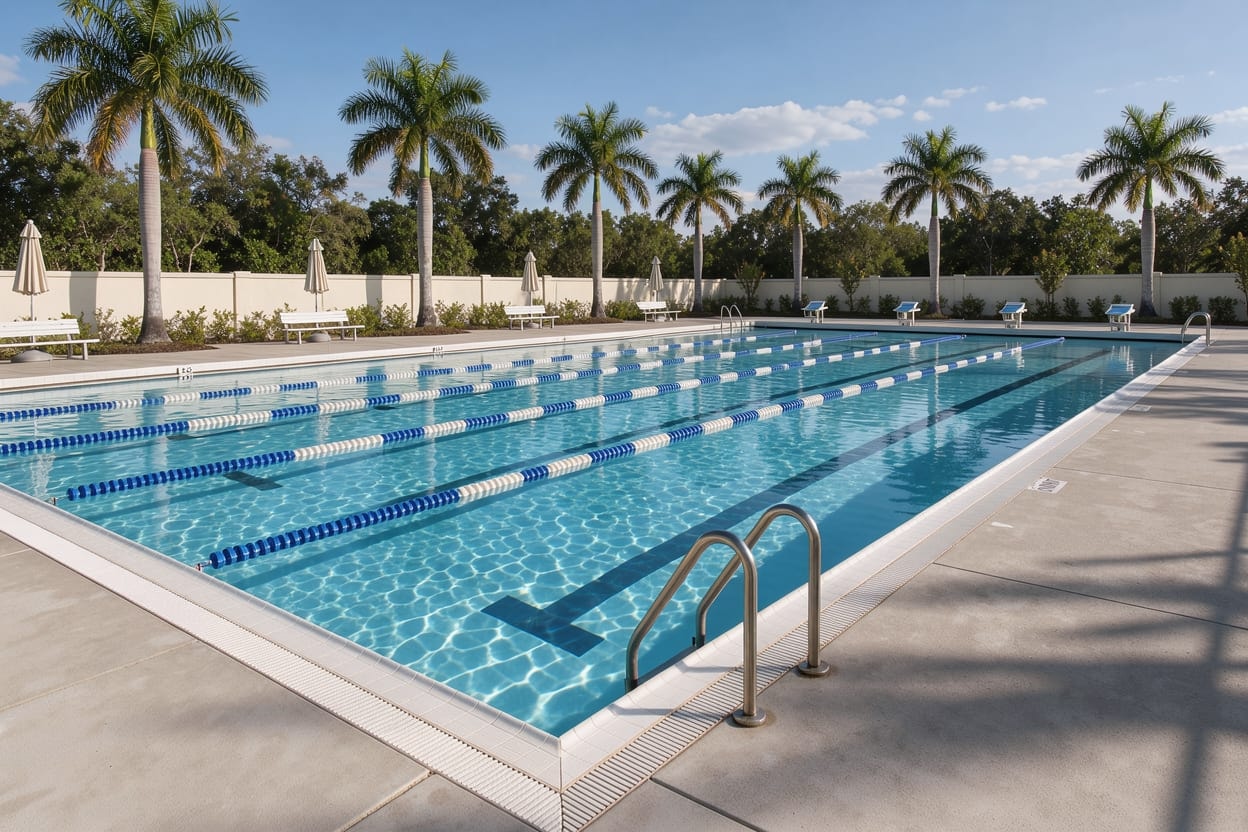
Lap swimming sends the swimmer from one end of a pool to the other. A turn changes direction and lets the next length begin. The competitive swimming reference distinguishes short-course swimming from long-course swimming by the length of the pool. It explains why world records set in short-course pools are kept separate from those set in long-course pools. A shorter pool can mean more turns over the distance of the race, so the course changes how much of the race takes place around a wall. The reference also describes short-course pools measured in yards in the United States and long-course pools measured in meters. A practice record therefore needs both the number of lengths and the pool length to describe the total distance. The swimming reference gives 25 yards as the short-course length in club, school and college swimming in the United States and Canada, and notes that meters are the standard for both courses outside the United States. Those units also explain why the event distances on a short-course program can differ from the long-course list.
Freestyle, backstroke, breaststroke and butterfly form the main set of strokes in the competitive swimming reference. Individual medley is an event in which the same swimmer uses each of those strokes over an equal portion of the distance. The order is butterfly, backstroke, breaststroke and then freestyle. Strokes and turns describe how a swimmer covers the distance. Pool length describes the setting in which those movements happen. In open-water competition the course is set in a body of water such as a lake or sea, with no pool wall at the end of each length. The reference treats pool and open-water events as generally separate competitions. In a pool race, the competitive swimming reference describes lane assignments based on previous times. That assignment is a separate part of the event from its stroke and distance.
What Masters means
U.S. Masters Swimming defines Masters swimming as swimming for adults 18 and older. Its overview traces the use of the term to adult track and field. It now identifies the age group in organized swimming, where the participants can have very different backgrounds in the water.
The organization's account of adult swim groups describes both coach-led group workouts and introductory instruction, with arrangements that vary by pool and by the instructors available. It also describes groups with swimmers of similar abilities. Its practice overview mentions circle swimming, using the clock and sharing a lane with swimmers at a similar pace. Those are parts of how a pool session is organized even for swimmers whose interest is ordinary exercise. Technique, speed and the ability to share a lane are separate considerations.
The islands and outdoor weather
Siesta Key is a barrier island between Roberts Bay and the Gulf of Mexico. It includes Siesta Beach, Crescent Beach and Turtle Beach. Lido Key is also a barrier island and is part of the city of Sarasota. Its Gulf-facing side has sandy beaches, and the island reference describes a beach and a woodland trail at South Lido Park. Those descriptions place the beaches geographically. They supply no conditions for a particular swim.
The National Weather Service explains that lightning can reach beyond the part of a storm where rain is falling. That guidance concerns outdoor activity and applies to the setting around a beach or an outdoor pool as well as a court. At either setting, the agency advises stopping for a storm and seeking a substantial building or, if one is unavailable, an enclosed hard-topped metal vehicle. It excludes small open rain shelters from suitable shelter. The heat and lightning article gives the agency's explanation of when outdoor activity can resume. The summer activity reference covers what federal sources say about active days and heat for children.